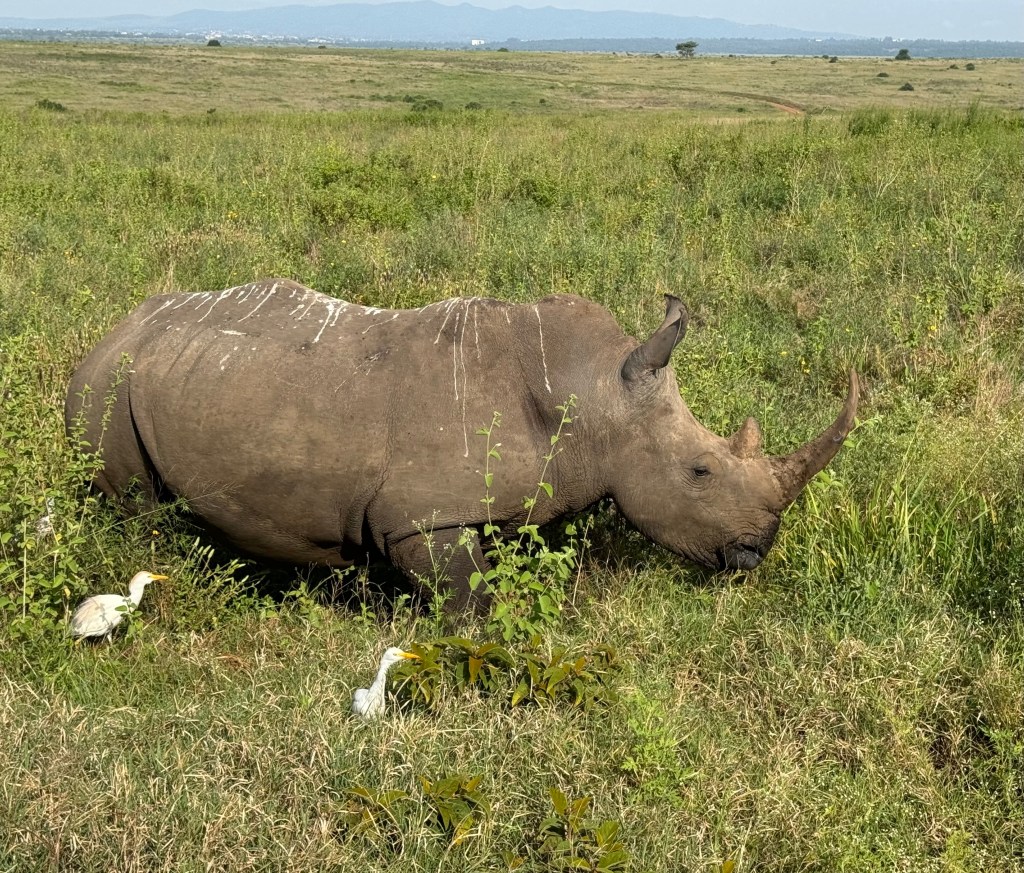
Today after breakfast we went for a morning game drive to Nairobi National Park. We were delighted to see Rhinos as soon as we entered the gates. There was a Mother and baby and another female grazing in the tall grass. Nairobi National Park is the major rhino sanctuary for breeding and restocking the other parks and covers approximately 45 square miles. It is also home to four of the big five animals, the lion, leopard, buffalo, and rhinos.
Next we spotted the Masai giraffe. This giraffe is noticeably darker, with patches separated by irregular, light brown lines all the way down to their legs. We won’t see the Reticulated giraffe on this trip as they reside in different areas of Africa than where we will travel over the next couple of weeks.


It is very rare to see the Serval Cat but we had the privilege of viewing this cat as he walked along the road in front of our safari vehicle. The serval is a solitary carnivore and is active both by day and at night. It can leap over 6 feet to pounce on its prey.
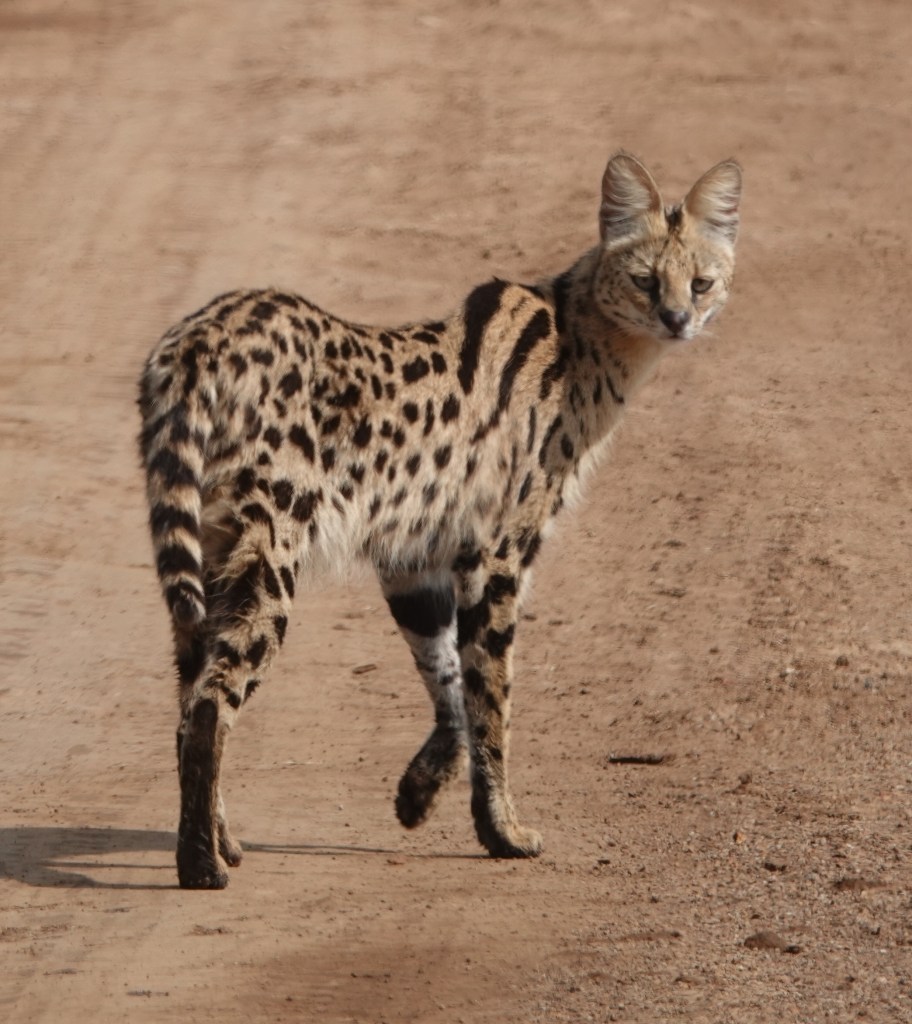
How lucky we were to see the cat getting ready to pounce on a small mouse.
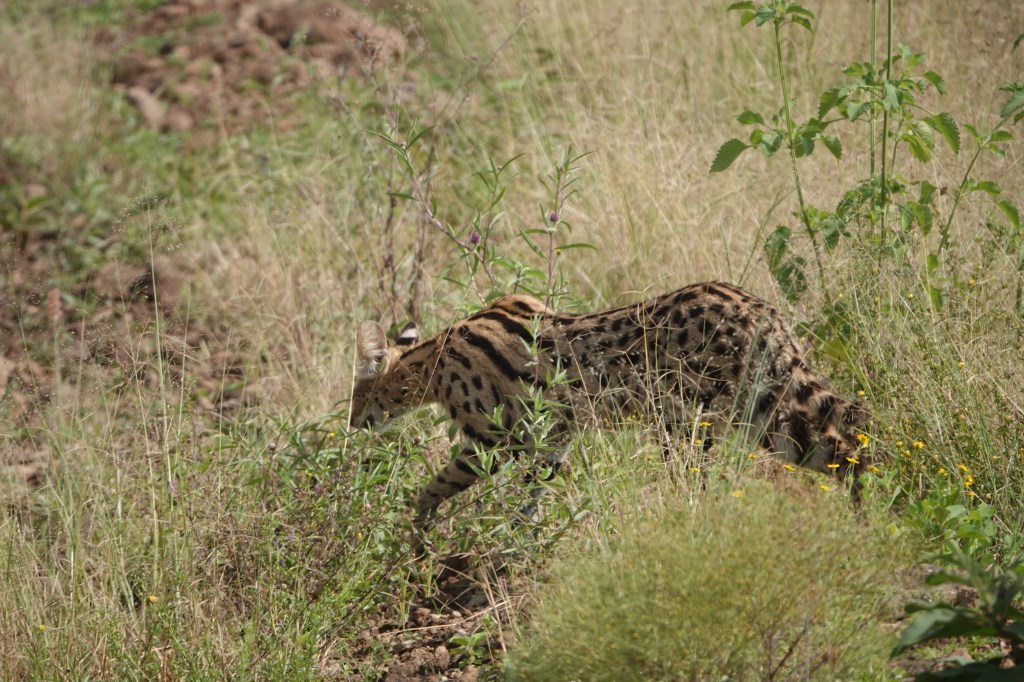
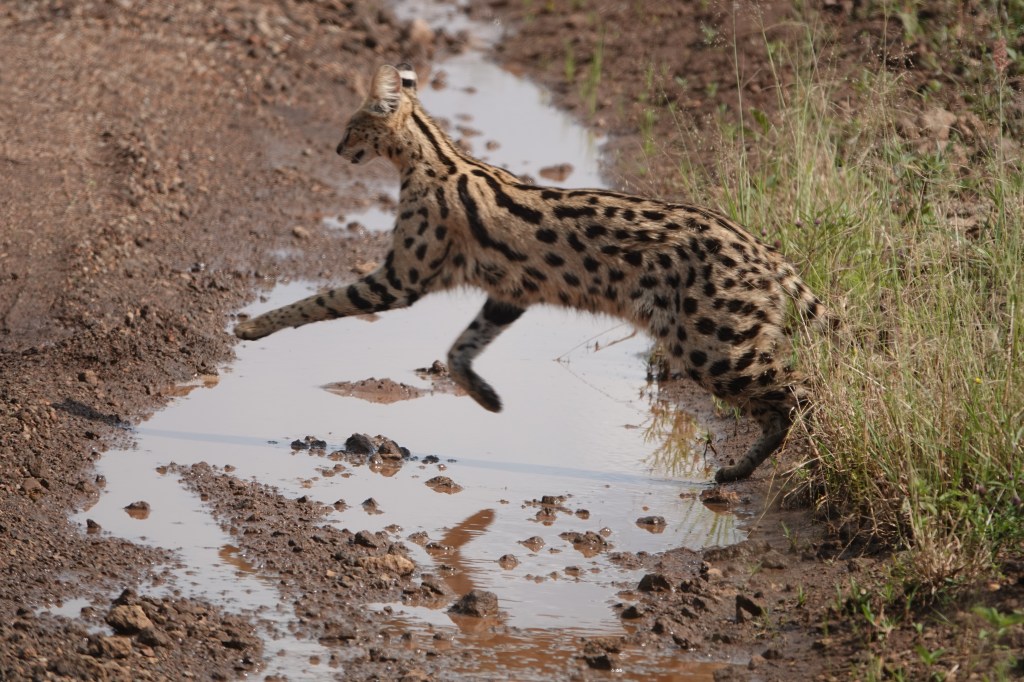
The cat is always on the hunt for small rodents, small birds, frogs, insects, and reptiles, and will also feed on grass.

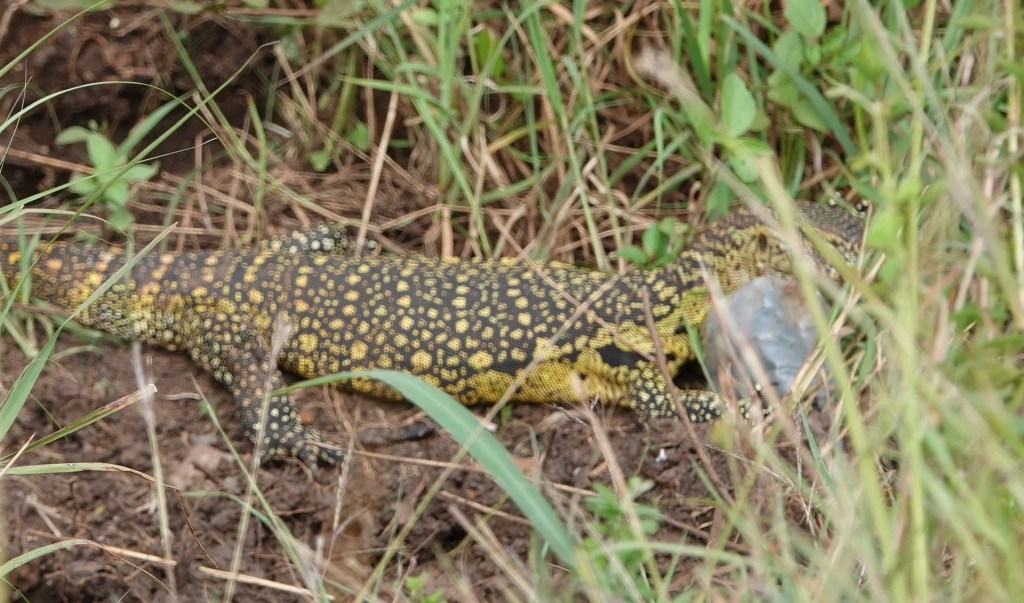
When we came up to the watering hole we could see just the tips of the heads of several hippos but we had already seen so many of them at Amboseli we focused our attention on the reptiles. First we spotted the nile monitor lizard. They are extremely good climbers and swimmers and will prey on small creatures including fish and birds which were in abundance here at the watering hole.
i
Next we zoomed our camera over to the other side of the pond where the crocodiles were basking in the early day sun. These Nile Crocodiles are the top predators in the African Rivers. Many zebras and wildebeest fall prey to them during the Great Masai Mara Wildebeest Migration. We may be a bit early to witness the Great Migration but often we are pretty lucky travelers and get to see more than we expect.

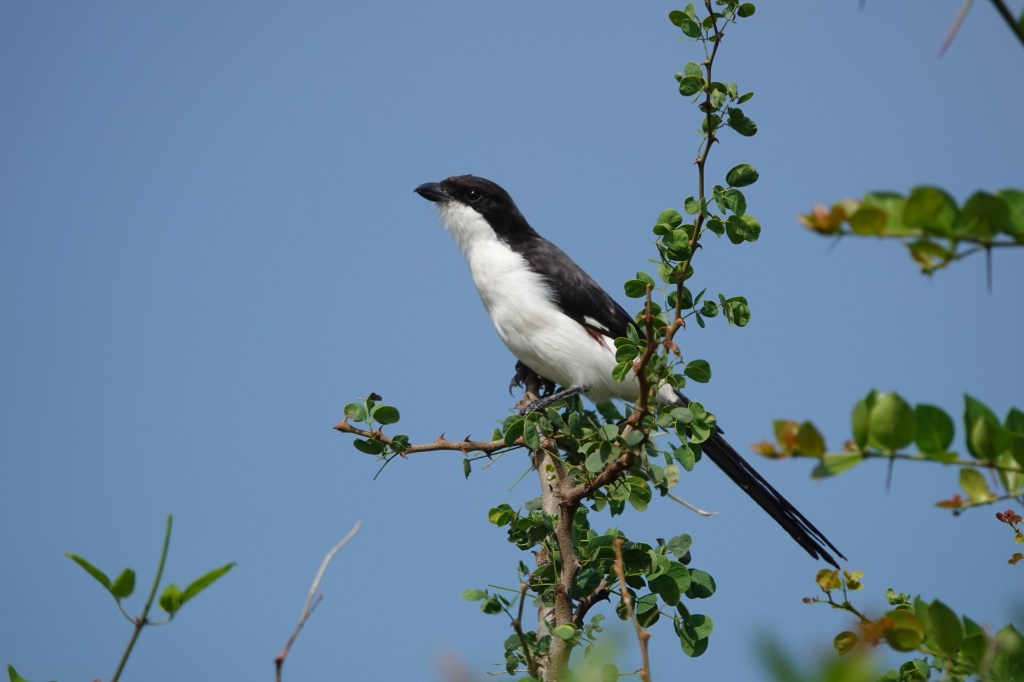
Around the pond we also saw several different birds. The one below is a grey back strike. He seemed to like the thorny bushes and acacia scrubs.
This one below is the Egyptian Goose. These geese are named for their place of origin and were considered sacred by the Ancient Egyptians and appeared in much of their artwork.

We spotted this Impala not far from the watering hole. It is one of the most common and most graceful of all Africa’s antelopes. I particularly loved the shape of it’s horns.

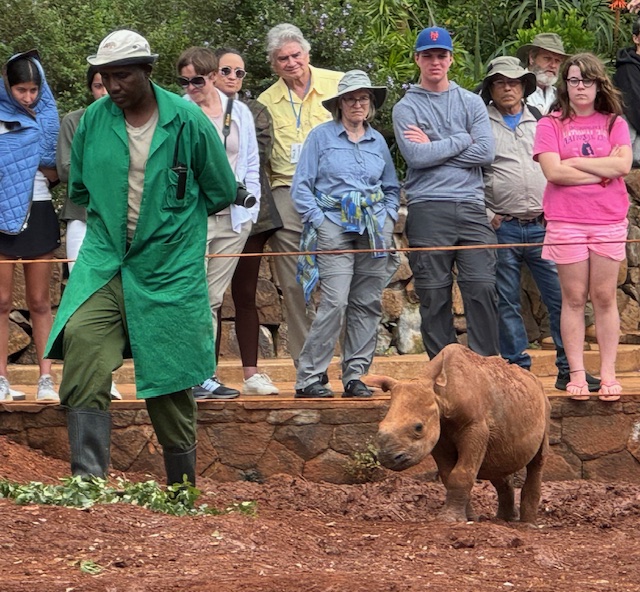
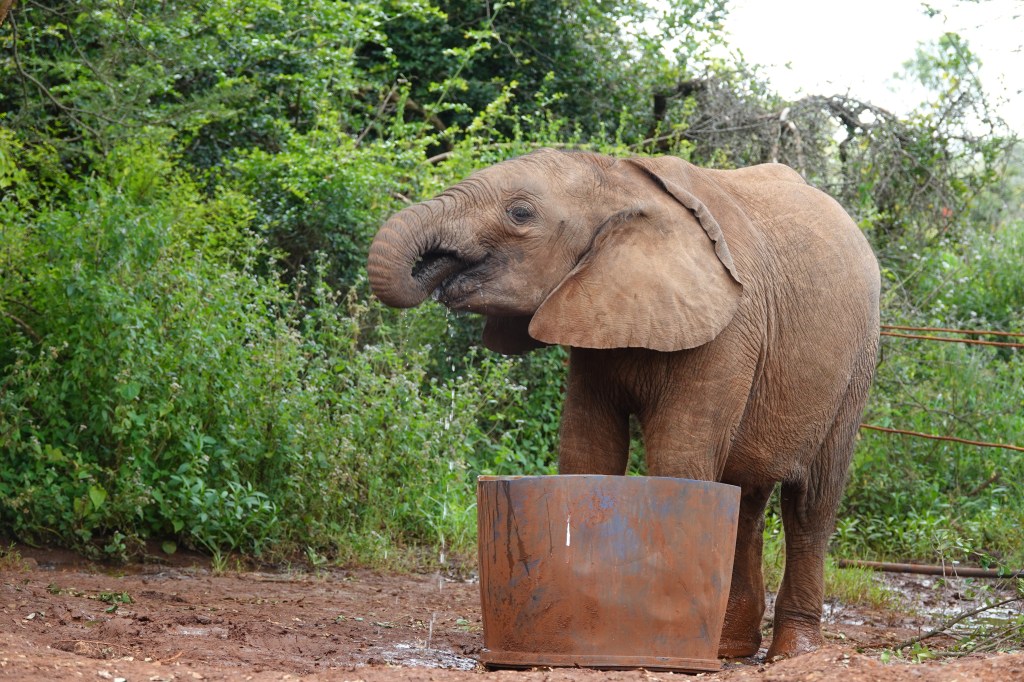
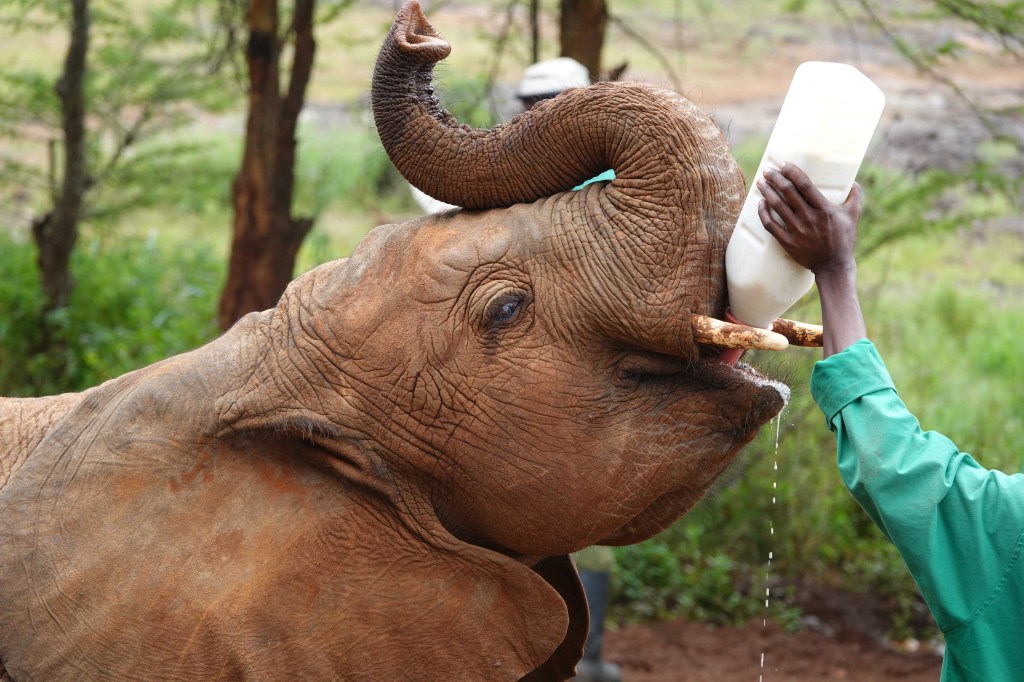
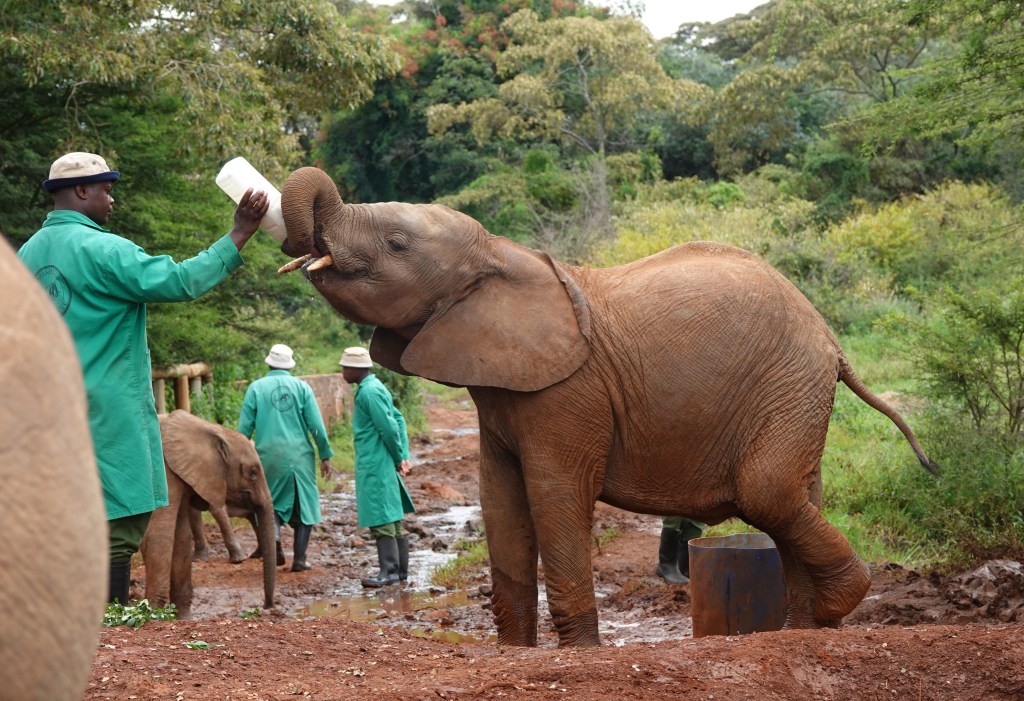
Adjacent to the National Park is the Sheldrick Elephant Orphanage. It is here where elephant orphans are brought and cared for many years before they are reintegrated back into the wild. The center opens to visitor tours once a day and African Horizons had secured a reservation for us to actually see the orphans and learn more about them. I must say this was a highlight of the trip for me. The visitation begins when the orphans get their mid day feeding but before the baby elephants came out of the forest we were introduced to a baby rhino. You couldn’t help but fall in love with the little one. He followed behind every step of his keeper and would stop so you could give him a pat. He was rescued when being attacked by hyenas in the wild and had many surgeries to save his life.
When it was time for the elephants to come for their feeding they certainly stole the show. It was such a delight to see them drinking their milk and eating the twigs the keepers had strewn around the ground for them. Barbara and Frank, two of the people on the tour with us actually adopted one of the babies. They will continue to receive updates about their baby elephant’s health along with new pictures of the baby. The babies will reside at the orphanage until about the age of four years old when they will be reintroduced back into the wild.


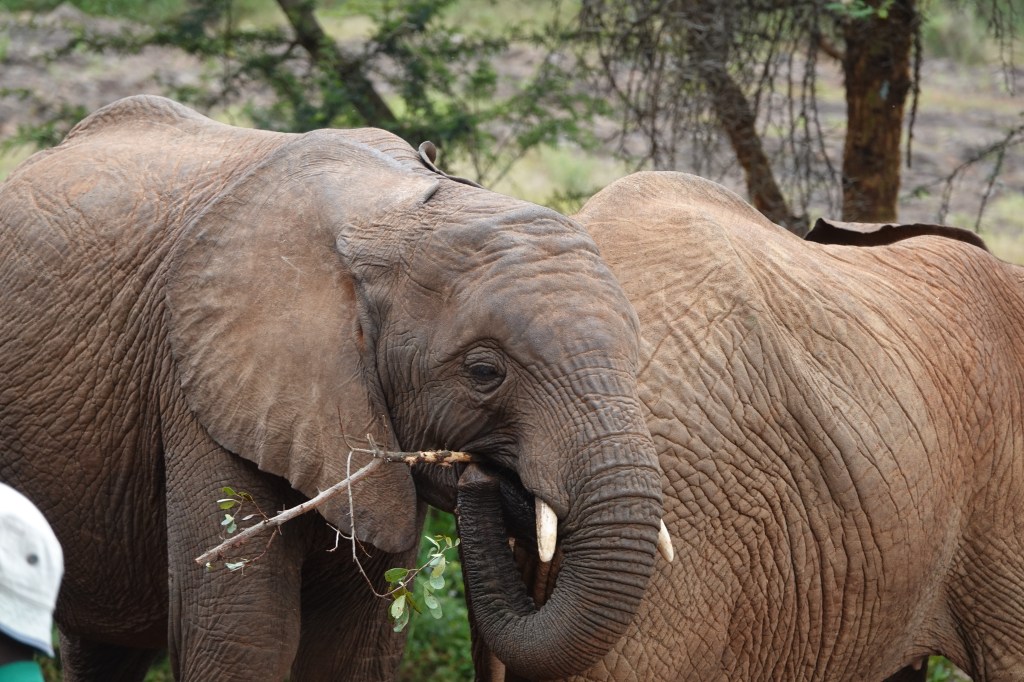
Visiting the Sheldrick Elephant Orphanage will certainly be an unforgettable experience from our time in Kenya.
We will be leaving Nairobi in the morning to travel north for about 4 hours to visit Ol Pejeta Conservancy where we will see lots of Rhinos.
 Leeward Travels